Case study · Mhor Collective
How Mhor Collective deepened their co-design practice with Chayn’s resources and training
Mhor Collective is a Scotland-based organisation dedicated to a human-rights approach to digital inclusion. When they went looking for materials to share with the frontline workers they train, they found something beyond the resources themselves: the principles of co-design, building something with the people a thing is for. Seeing how Chayn used co-design deepened how Mhor practises it, most visibly in how they design, develop and deliver training and support at grassroots and at strategic levels.
Plenty of resources to share, but few centred around the women they were for
Mhor means “big” in Gaelic, and the organisation’s mission and ethos reflect their name. Mhor Collective takes a human rights approach to digital inclusion, working with people affected by gender-based violence, homelessness, substance use, economic marginalisation, migration, and forced displacement. They see digital inequality as a social justice issue, closely connected to different forms of offline exclusion. Irene Mackintosh, Digital Inclusion Lead at Mhor Collective, regularly works with women who have experienced abuse, violence, poverty, homelessness, and economic marginalisation. She also works with migrants and asylum seekers.
Part of Mhor’s work is providing support to other organisations, and working closely with frontline workers to raise awareness of digital inclusion issues. That means finding practical resources they can share, particularly ones that take an intersectional and multilingual approach.
Mhor was already involving affected communities and experimenting with co-design principles. But Irene had seen how easily those principles are cited without actually being practised. Many organisations claim to use them, but their resources lack the real presence and voices of the communities they serve.
Rather than just saying, oh yeah, we did it, we listened a bit, but we still cracked on and did whatever we want. That’s not what’s happened here.
Chayn’s resources and a free session on co-design, embedded across Mhor’s work
Irene was on a quest to find good resources she could share with partner organisations. That’s how she first encountered Chayn’s work. What struck her most wasn’t just that Chayn’s resources were useful, it was how they were made. Chayn didn’t guess what survivors needed, but built everything by listening to and involving the women the resources were for. That was apparent in small but meaningful ways: gentle colours, careful wording, multiple languages, and nothing cold or clinical.
Everything, from the colours, to images, to the language consideration, everything you’d come through had the voices of women at the centre of it.
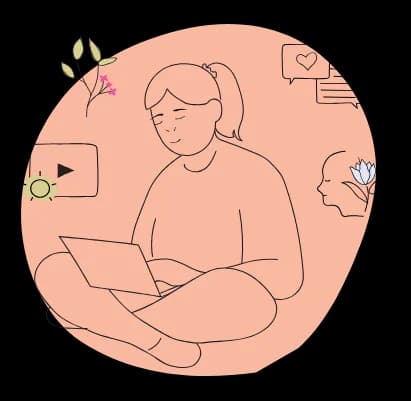
Another aspect that stood out was the softness. “When I think about Chayn in particular, I think about the softness of the design,” she shared. Designing for women who have lived through multiple forms of systemic harm means there is “that need for it not to be angry, not to be judgy,” but instead to provide solutions that “feel softer and ready to listen.” For women too often failed by statutory services that can feel institutional, cold, and impersonal, that softness sends a clear message that this space is different.
Around the same time, Irene attended one of Chayn’s free events on trauma-informed approaches and co-design principles. While co-designing was not new to Mhor, engaging with Chayn’s work encouraged the collective to incorporate these ideas at an even deeper level, thinking about digital inclusion through a trauma-informed and harm reduction lens, and exploring the possibilities that open up when these principles guide the work.
Learning from each other
Our work with Mhor Collective has also been valuable for Chayn. Many of the women Mhor works with either don’t have laptops, or prefer using mobile phones for privacy and safety reasons. That meant our resources needed to work better on smaller screens. Irene also suggested we could make our content more inclusive by simplifying the language for women with lower literacy levels, or who are accessing content written in their second language, recommending shorter blocks of text, more animations, and simple buttons.
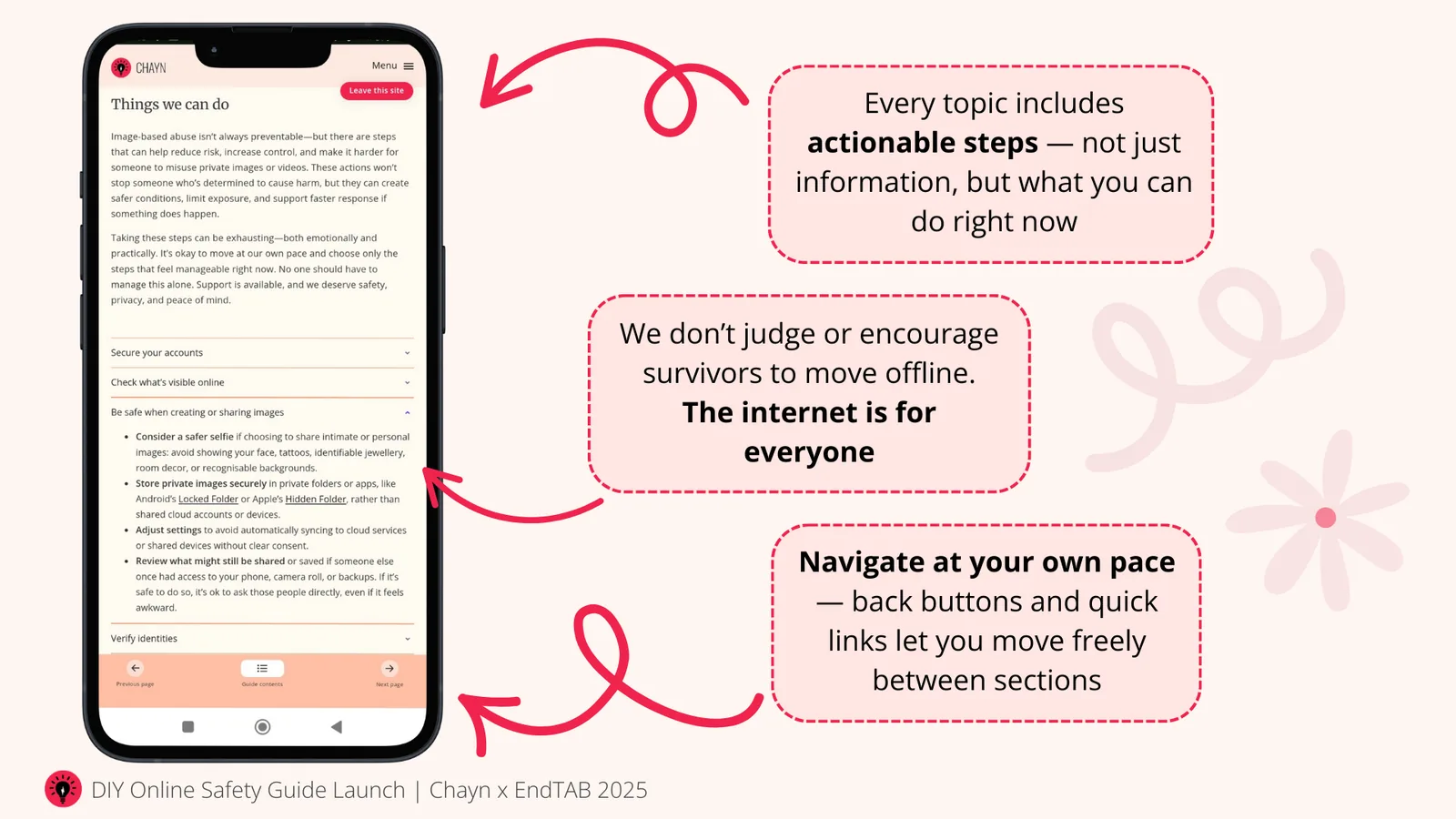
We recently relaunched our DIY Online Safety Guide, which brings together the trauma-informed, soft design principles Irene raised alongside a new mobile-accessible site. As we revamp our other guides, such as the Good Friend Guide, we hope these improvements become even more obvious across our website.
All Chayn resources are published under a Creative Commons Attribution licence, so they are free to use, reuse, adapt, and share. If you find what we do valuable, please draw on our resources, strategies, and design principles. And when you do, we’d love to hear your story and share it too.