Summary for policymakers · September 2026
Explicit Harms of Non-Explicit Images
Defining Image-Based Abuse in Pakistan and the Diaspora

Report summary
In many of the countries where major technology platforms are based, image-based abuse is defined as being of a sexual nature.1 The laws, the content moderation systems, and the reporting tools that exist to protect women were subsequently built around a specific kind of harm: the non-consensual sharing of nude or sexually explicit images. But our research finds that for millions of women around the world, almost any photograph can be weaponised, and harm is determined more by what the image can be made to mean, than what it actually shows.
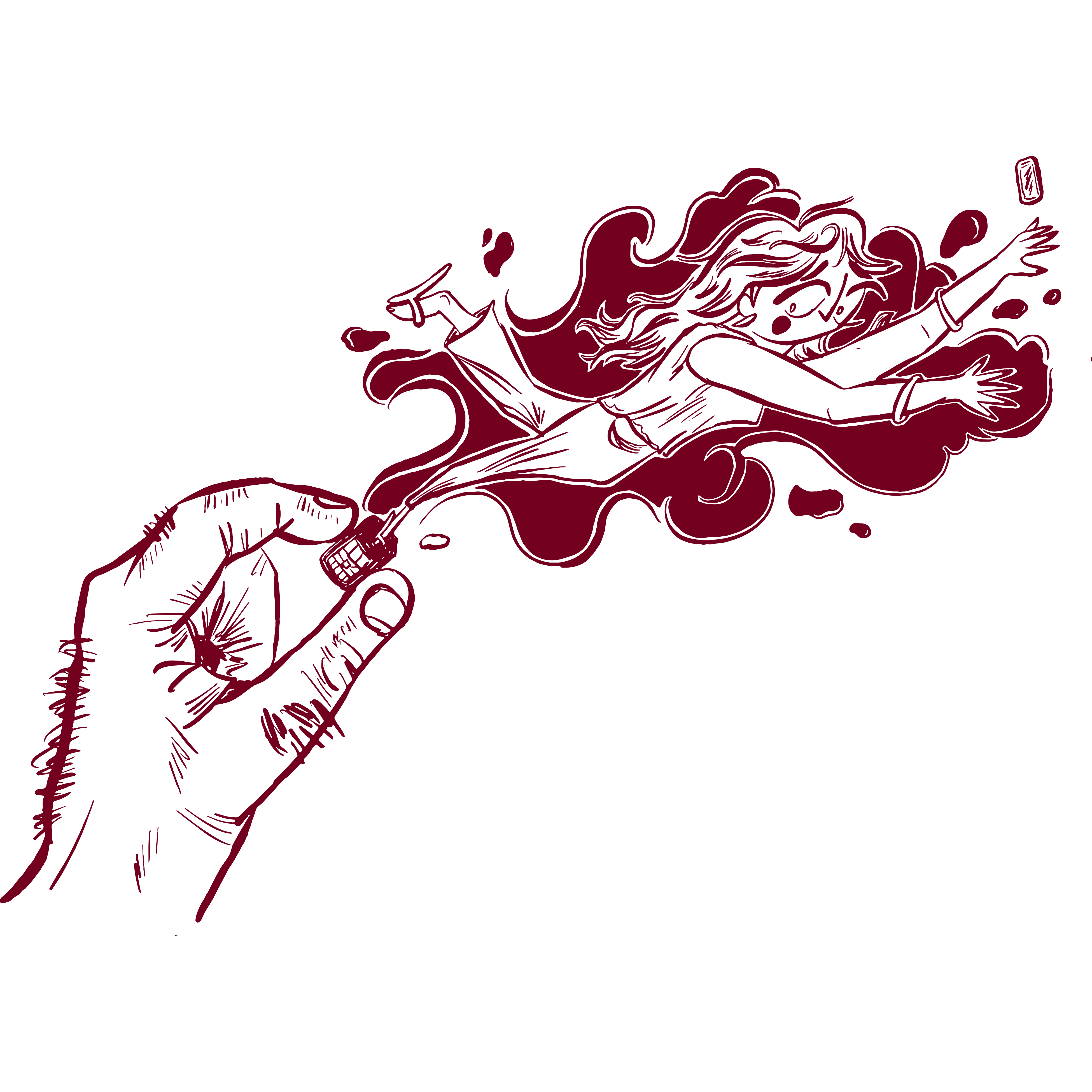
A photo of a woman sitting next to a male classmate. A video of her dancing at a party. Even an ordinary selfie in the wrong person’s hands. For women in Pakistan, and many other parts of the world, images like these can trigger punishments including forced marriage, loss of work or education, community ostracisation, violence, and in extreme cases, death. The harm in these cases comes from who holds the image, who sees it, and what meaning is imposed on it, not its content.
This research exists because there is a gap in what platforms, policies and legal systems define as harmful, and what many women around the world – including in Pakistan – experience as harmful. And that gap needs closing.
This is an excerpt from Chayn’s research Explicit Harms of Non-Explicit Images: Defining Image-Based Abuse in Pakistan and the Diaspora designed for policy-makers.
The gap in the law
110
countries have no laws against image-based abuse at all
67
countries have laws that meet the UN Cybercrime Convention standard
1 in 3
women will experience violence in their lifetime
What this research found
1.Cultural and Social Norms Shape Understandings of Gender and Privacy
Across interviews, participants described a social landscape where judgements about what is “intimate,” “private,” or “inappropriate” cannot be separated from the cultural, religious, and political forces that shape everyday life in Pakistan. Women navigate intersecting systems of patriarchal control, honour-based accountability, religious policing, and constant social surveillance. What counts as a “private” image is shaped by who is watching, what family honour demands, how religion is interpreted, and the ever-present fear that visibility itself can trigger punishment.
2.Intimacy Has No Fixed Definitions
What counts as a “private” or “harmful” image shifts with values, geography, age, gender, class, and who is making the judgement. An image of a man dancing at a wedding may carry no consequences for him, but the same image of a woman could potentially be catastrophic for her. Perceptions of intimacy are shaped by the specific household and social circle in which a woman was raised, and can differ substantially even between women with similar backgrounds.
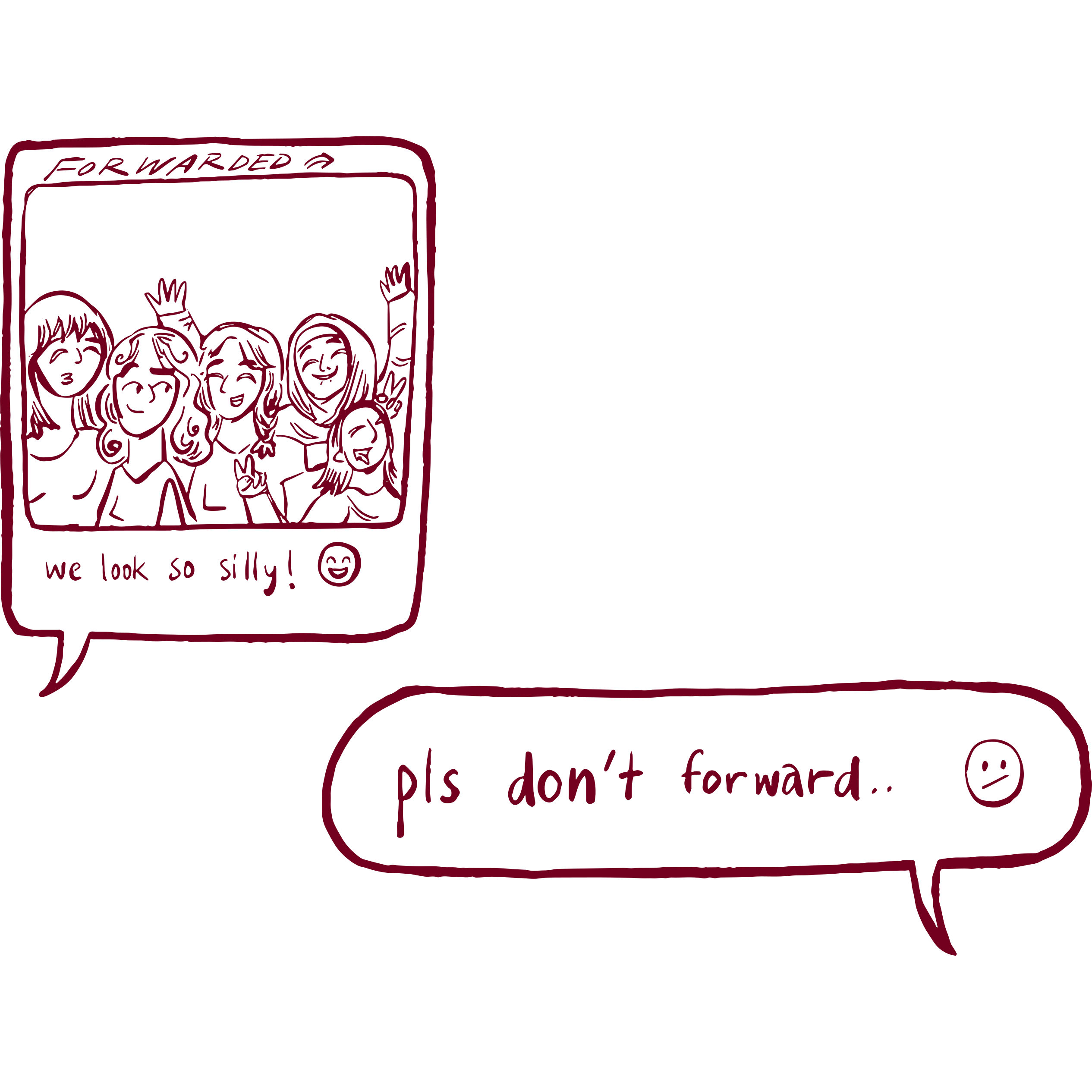
Women do not navigate images alone. They navigate them under the weight of a real, and imagined, audience. An internalised permanent censor that shapes what they wear, where they go, what they post, and what they allow to be photographed.
3.Image-Based Abuse is Broader Than “Nudes Without Consent”
Participants described a wide range of images they considered private, intimate, or potentially dangerous if shared without consent: hair visible without a hijab or head covering; Western clothing, revealing clothing or anything that shows the contour of the body; a photo dancing or laughing at a social event; being photographed alongside a man who is not a husband or a close family member; a photo taken at night, in a bedroom, or at a location with a certain reputation; a voice note; a screenshot of a fabricated conversation; or an AI-generated image created from a photograph of someone’s face.
None of these contain nudity or explicit material, but the possibility of recontextualisation, misinterpretation, and the ease with which any image placed in the wrong hands or viewed with the wrong framing can be made to tell a different story, is where the harm lies. Across accounts, participants returned again and again to the refrain that it is not what an image shows that makes it harmful, it is whether the woman gave consent for it to be shared.
4.Harm is Collective: The Central Role of Family and Community
A leaked image does not just affect the woman in it. It lands on her entire family, and sometimes community. Participants described fathers who were unable to work, sisters whose marriage prospects were destroyed, mothers who were shunned from the community and households that were looked at “in a shameful manner” by everyone around them. Honour is collective and the threat of collective shame is itself a tool of control.
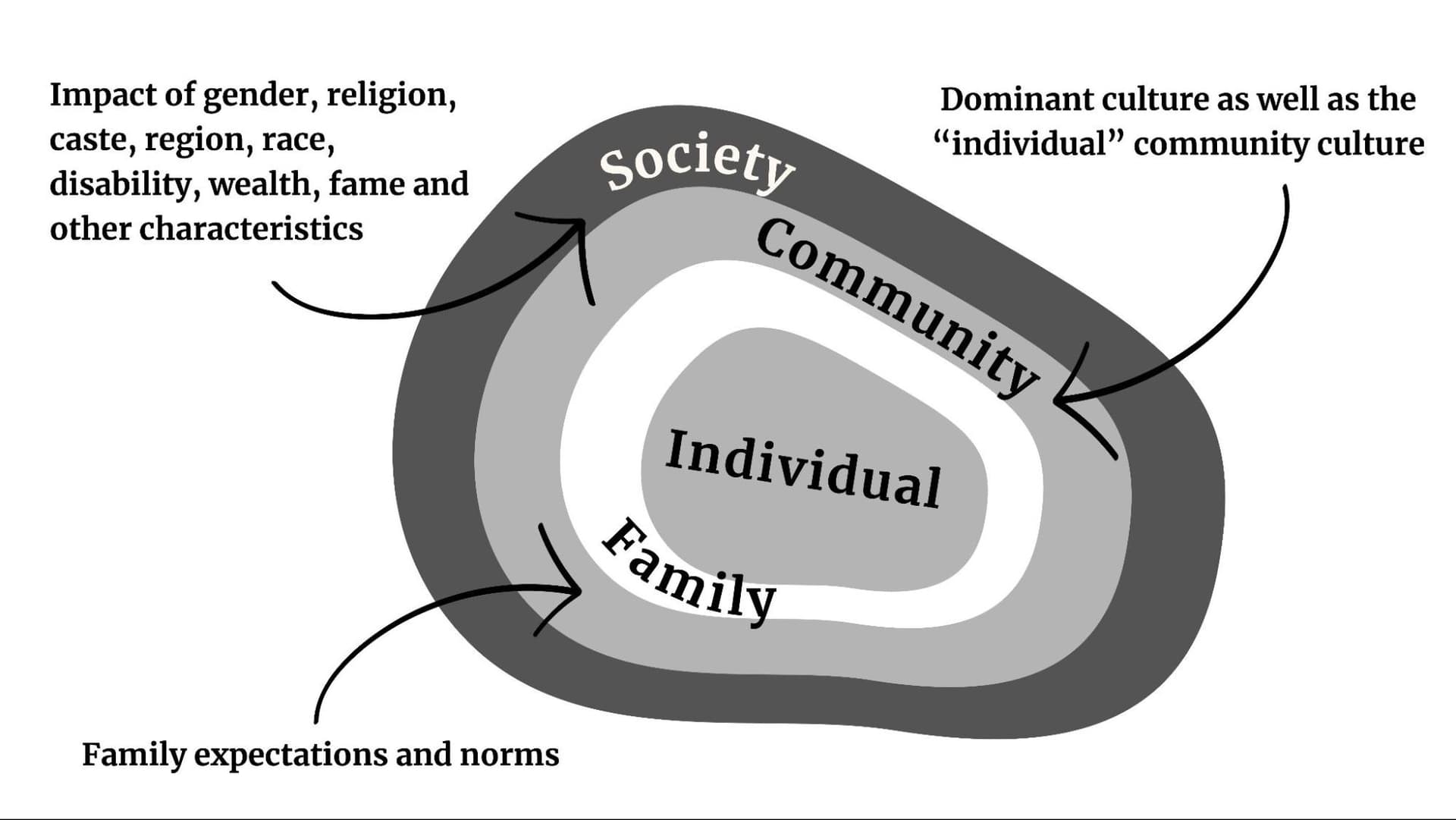
This collective dimension shapes who women tell when something goes wrong, where they go and whether they seek help at all. Disclosure of abuse can compound the damage, bringing shame on the family, triggering punishment from within the home, or exposing a woman to community-sanctioned ‘justice’. The architecture of harm and the architecture of help-seeking are in direct conflict. And yet, when families do stand by survivors, participants were clear that it makes a material difference.
“[Intimacy is not just the] face you keep to the people around you, but also the face your family has kept to the people around them.”
5.The Consequences of Image-Based Abuse Are Far-Reaching and Long-Lasting
Once an image or video existed and others had seen it, participants described losing jobs and being pulled out of education, being forcibly married or prevented from marrying, being disowned by family and community members, facing physical violence from family members, and experiencing suicidal crisis.
Participants described somatic responses to the trauma including prolonged bleeding, fainting, severe weight loss, and chronic insomnia. They described serious implications on their mental and emotional health. Families paid blackmailers what they could, sometimes escalating from small sums to life-changing amounts, because formal help felt inaccessible or too dangerous.
And in some cases, survivors described fearing for their lives, repeatedly referencing honour killings. In this context, the possibility of a leaked image is inextricably linked to the possibility of death, creating a climate of fear.
Women who are LGBTQ+, from religious minorities, from highly conservative backgrounds, or who occupy public-facing roles have compounding risk, and these risks may follow them into the diaspora even as they change cultural and legal contexts. For a transgender woman, pre-transition images carry the same or greater danger as sexually explicit material. For religious minorities, images can be fed into blasphemy narratives with life-threatening consequences. Even when images are removed, the knowledge of who has seen what, the shift in how others look at you and the fear that more might surface simply does not disappear.
6.Perpetrators of IBA, and Their Motivations, Are Diverse
Intimate partners and ex-partners are common perpetrators, but so are male relatives, classmates, neighbours, strangers, political opponents, and even institutions. Organisations like the Digital Rights Foundation have noted a shift over time, with anonymous accounts and organised networks playing an increasingly significant role, including perpetrators who are transactional, operate across borders, and disappear after extracting what they want.
Motivations are equally varied and range from financial extortion to punishment for perceived disobedience or romantic rejection to organised harassment designed to silence women in public life. This research identifies seven distinct ways image-based abuse is used to cause harm: silencing women from speaking out; shrinking their confidence or public presence; shaming them through reputational damage; shunning, by isolating them from family, friends, and colleagues; strong-arming, using images as leverage to force compliance or continued contact; financial extortion; and sexual gratification. These motivations frequently overlap and reinforce one another. Effective responses must account for this range, rather than treating all perpetrators as a single type.
7.Images Circulate Through a Dense Web of Platforms and Channels
Images do not stay in one place. Women described content moving across global social media platforms like Facebook, Instagram, and X; encrypted messaging apps like WhatsApp; cloud storage; dating apps including Tinder, despite being banned; and sometimes into offline circulation where images are printed out and physically delivered to parents. Images found their way to family members, peers, universities, or police stations, and were presented as “evidence of immorality”. Perpetrators ensure that families and communities are reached, regardless of how digitally connected a woman is.
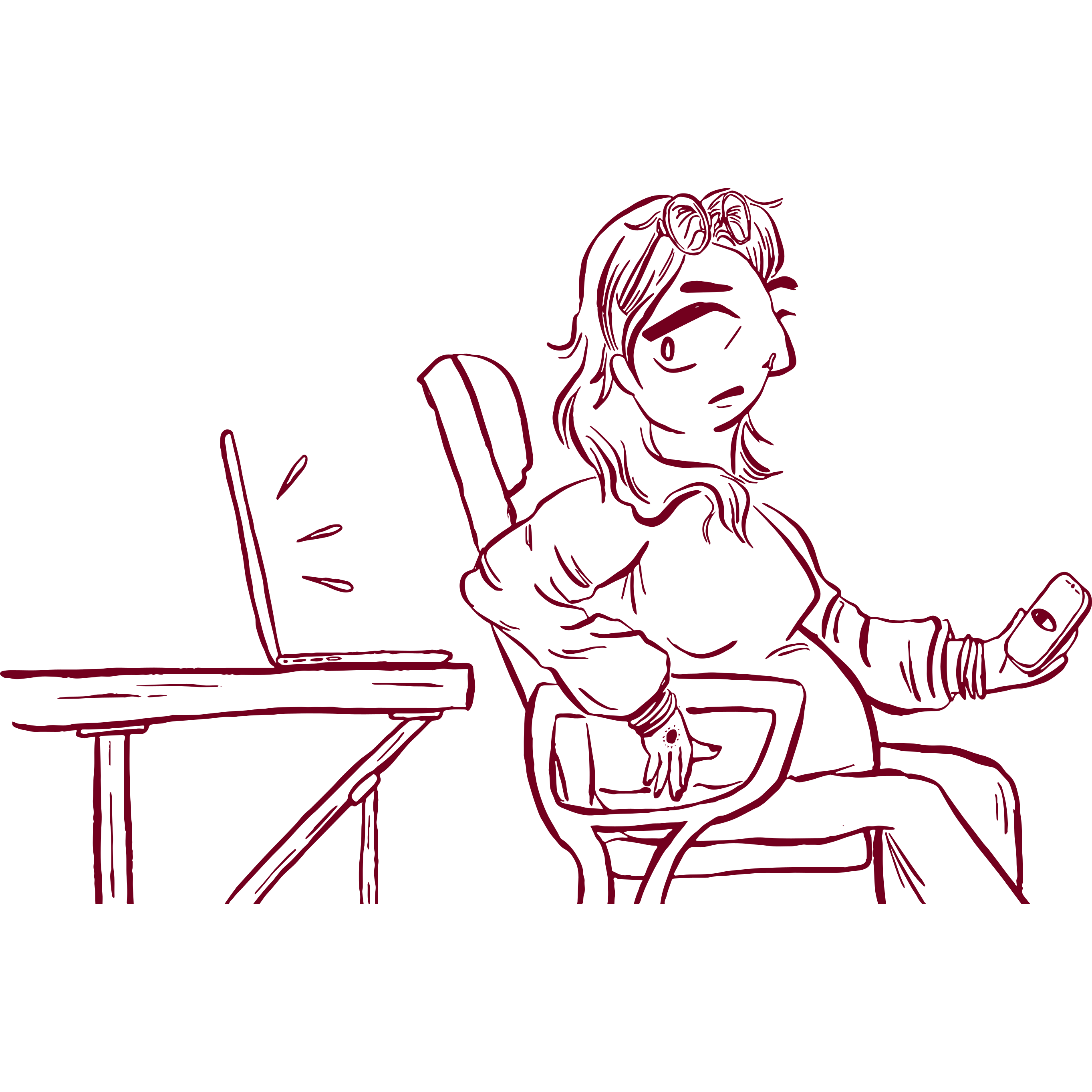
8.Experiences Seeking Help Are Diverse. A Broken System With Bright Spots
Help-seeking in Pakistan spans a surprisingly wide ecosystem including cybercrime units, NGOs, women’s police stations, university administrators, regulatory bodies, families, friends, and informal community networks. The Federal Investigation Agency (FIA), now operating as the National Cyber Crime Investigation Agency (NCCIA), was the most commonly referenced formal route, and some participants described ultimately effective outcomes through persistent engagement with it. Organisations like the Digital Rights Foundation and the Aurat Foundation emerged as trusted, specialist sources of support. They were valued because they were women-led, non-judgmental, and able to act as intermediaries with platforms and authorities when survivors could not or would not go directly.
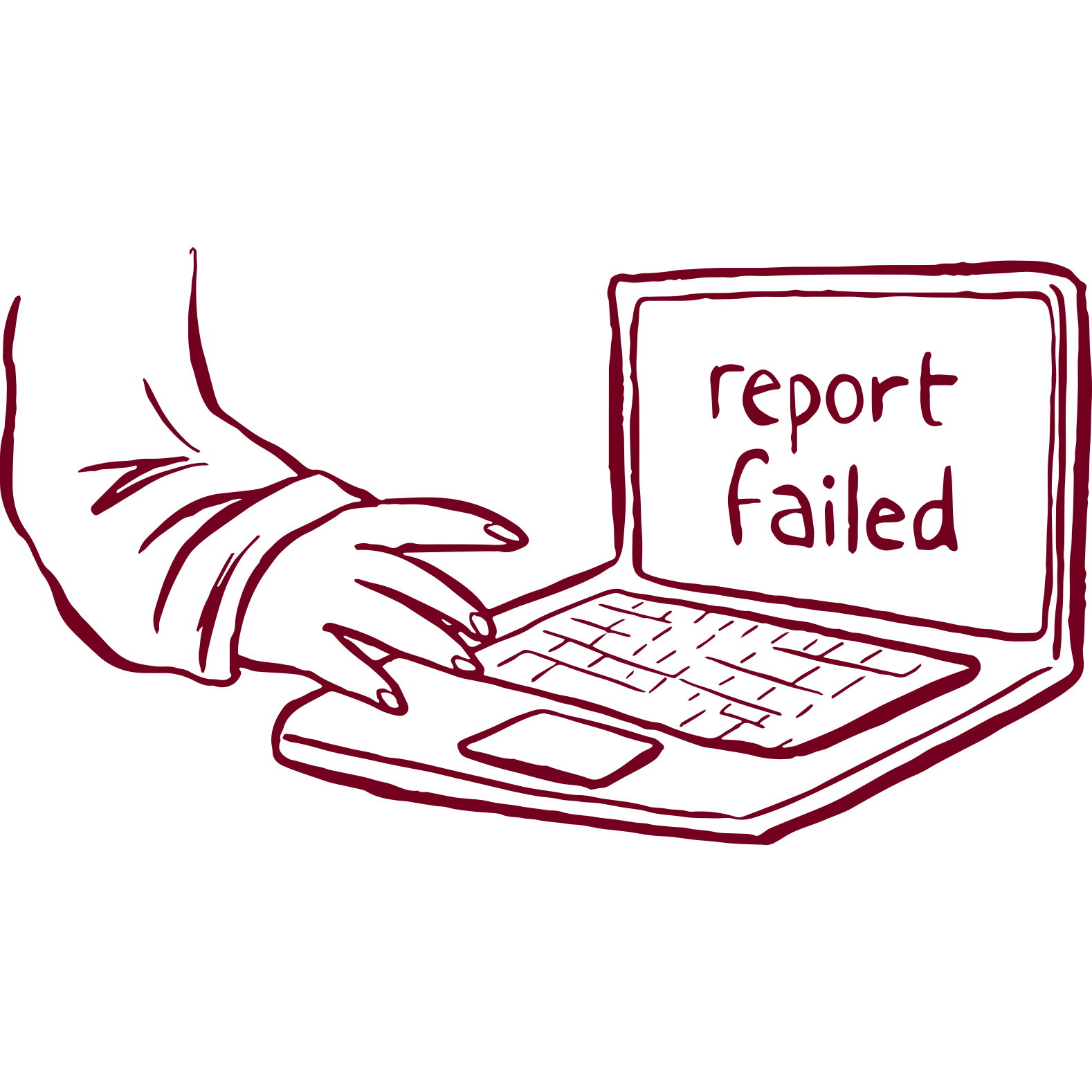
Families and close relationships were central to how women navigated these experiences, for better and worse. These bright spots, however, sit within a system that too often failed survivors. The barriers to help-seeking were structural, pervasive, and frequently compounded the original harm.
9.The Barriers to Seeking Help Are Structural
Across platforms, law enforcement, and legal frameworks, participants described a consistent pattern of dismissal, victim-blaming, and structural inadequacy. They talked about platforms that require mass reporting thresholds before acting, that take days to remove content while images spread, that dismiss non-sexual images as falling outside of community guidelines, and that provide no local language support or culturally informed moderation. They talked about re-traumatising experiences with the police and legal systems where they would be forced to re-tell their story repeatedly, fill out endless paperwork, be questioned as to why they had such images in the first place, and be told that their images are not explicit enough to act on. In all cases, participants talked about a system that was slow and resistant to respond. This slowness could be the difference between a contained harm and a public catastrophe and was seen as an important factor in whether a woman’s situation could be recovered.
This failure is not unique to Pakistan. In the UK, for example, where IBA law exists, it still only covers nude or sexually explicit images. At present, 110 countries have no laws against image-based abuse at all.3 Victim-blaming, dismissal, and slow, unresponsive systems are a feature of survivor stories worldwide. The narrow, Western-centric definition of what counts as an intimate image is a failure that affects women across the Global South and in diaspora communities everywhere. Pakistan’s specific cultural context can make the consequences more acute, but the nature of the problem is global.
10.Resistance and Rebellion Against Harm and Societal Pressure Caused by IBA
Women are not passive in the face of this harm. Across the research, participants described navigating, defying, and actively fighting back. They described a spectrum of resistance that ranged from the internal to the collective. This research identifies seven distinct modes of resistance and rebellion that women revered to: questioning and refusing to internalise the shame; denying that they had shared images; defending, by holding ground in digital and public spaces; going on the offensive through legal action, platform reporting, or direct social pressure on perpetrators; retreating and returning – withdrawing from digital and public life before finding a way back on their own terms; healing alone through the slow internal work of separating self-worth from what was done to them; and healing together, turning personal experience into advocacy, peer support and collective action.
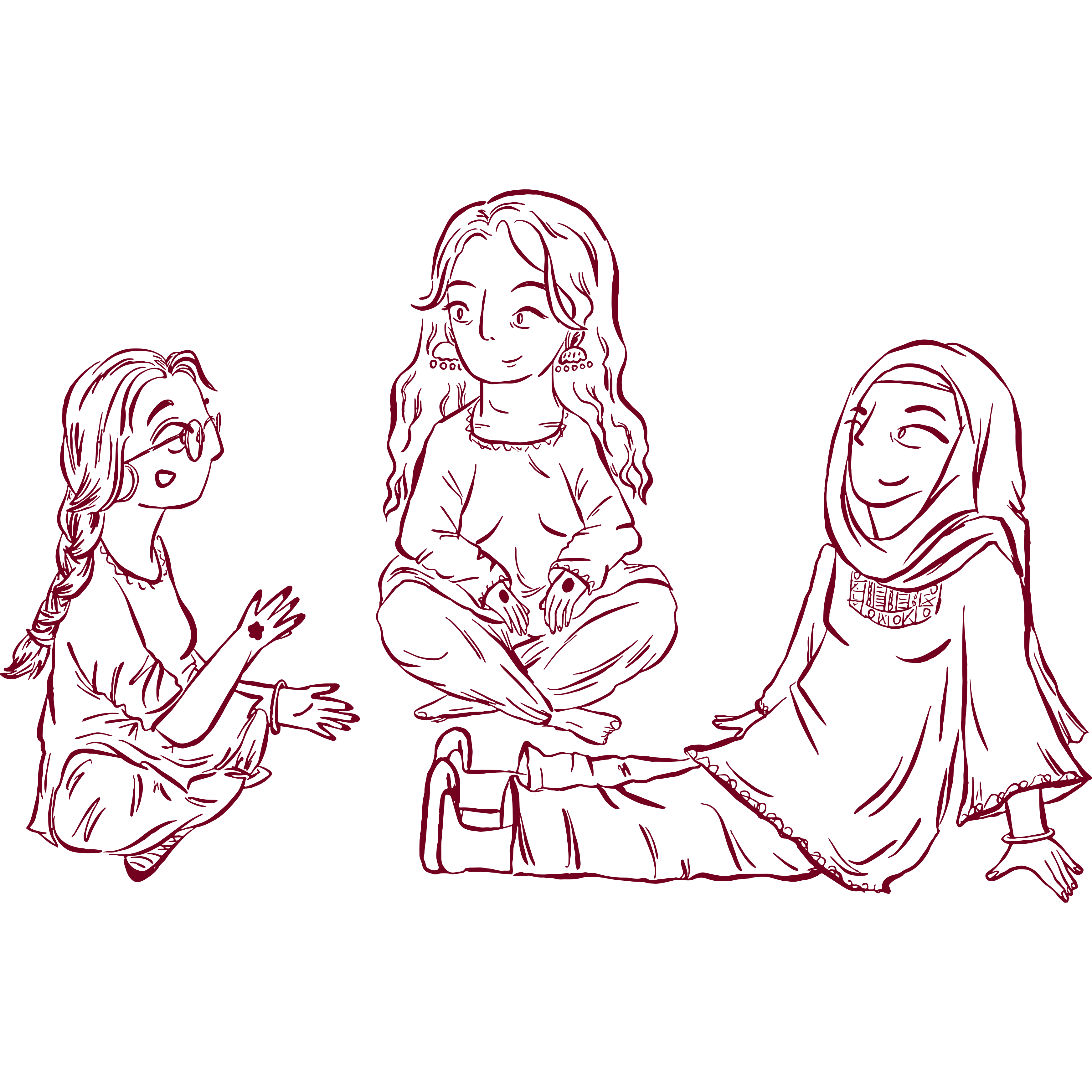
Defining image-based abuse
Image-Based Abuse (IBA) is a type of Technology-Facilitated Gender-Based Violence (TFGBV) which covers a wide range of harms that can be carried out through digital tools. Gender-based violence is not new, with global estimates showing that one in three women will experience violence in their lifetime.4 However, as technology evolves, so do the tools people use to cause harm. Technology-Facilitated Gender-Based Violence (TFGBV) is violence and abuse against women, girls, and gender minorities that is committed, assisted, or amplified through digital means. In our previous Orbits report,5 we mapped this landscape in detail, offering a taxonomy of the many ways technology can be used to control, threaten, or abuse.

The term Image-Based Abuse is sometimes used interchangeably with phrases like intimate image abuse or the non-consensual sharing of intimate images. At Chayn, we deliberately avoid the word intimate in this context. The meaning of intimacy shifts across cultures, communities, and even individuals, and understanding what it means in Pakistan is a central aim of this study.
In our definition, image-based abuse refers to the taking, sharing, or threat of sharing an image or video of someone without their consent. The legal language varies across countries, but most definitions include nude, semi-nude, or sexually explicit images or videos – whether they are real or artificially created or manipulated, such as in the case of deepfakes.
Technology-facilitated image-based abuse is regulated differently across jurisdictions. In many countries there is no single ‘IBA law’ and prosecutors rely on a combination of offences (e.g., intimate image offences, harassment, privacy/data protection, child sexual abuse material, defamation), depending on the facts.
Despite the growing recognition of this harm, global legal protections remain inconsistent. At present, 110 countries have no laws against intimate image abuse. Sixty-seven countries have what are considered “sufficient” laws – meaning they align with Article 16 of the UN Cybercrime Convention – while eighteen have laws that fall short of this standard, including the United States, Japan, and Nepal.6 So far, Australia appears to be the only country that explicitly recognises images of a person without clothing of religious or cultural significance as intimate images.7
| Country | Laws | Includes Deepfakes | Penalties for offenders | Penalties for online platforms |
|---|---|---|---|---|
| UK | Yes | Offenders can face unlimited fines and/or up to 2 years in prison. | Platforms are required to proactively remove and prevent non-consensual intimate content before it’s posted. Non-compliant platforms can be fined up to £18 million GBP ($24m USD) or 10% of annual global turnover, whichever is higher. | |
| Australia | Yes | Offenders can face up to 100 penalty units (equivalent to $22,000 USD / £16,500 GBP) or and/or up to 3 years in prison. | Non-compliant platforms can be fined up to 500 penalty units (equivalent to $557,000 USD / £415,600 GBP). | |
| US | Yes | If prosecuted as a federal crime, offenders can face up to 2 years in prison (up to 3 years if the survivor is a minor). Survivors can sue for up to $150,000 USD (£112,000 GBP) in damages. | Online platforms must remove the content within 48 hours from a valid demand and make reasonable efforts to remove identical copies. | |
| Germany | No specific law for IBA yet, but the German Criminal Code (StGB), some EU laws (GDPR and DSA), and the Right of erasure form the legal framework. | Not yet (expected after the EU directive combating violence against women and domestic violence is adopted into German law). | Germany doesn’t have a single dedicated law for IBA, so prosecutors typically rely on a combination of laws. | The General Data Protection Regulation (GDPR) ensures the right to obtain the erasure of personal data, including pictures. Non-compliant platforms can be fined. The EU directive combating violence against women and domestic violence states that the non-consensual sharing of intimate or manipulated material is a criminal offence. This directive will be adopted into German law by June 2027. |
| South Korea | Yes | Offenders can face up to 7 years in prison or a fine of up to ₩50 million KRW ($33,000 USD / £25,000 GBP). | South Korea’s approach to platform accountability is still developing but the Korea Communications Standards Commission can request platforms to remove content. | |
| Pakistan | Yes | Offenders can face up to 5 years in prison (up to 7 years if the victim is a minor) or a fine of up to 5 million rupees ($18,000 USD / £14,200 GBP). | Individuals can request the removal of intimate content. | |
| India | Information Technology Act, 2000 (IT Act) and Bharatiya Nyaya Sanhita (BNS) | Not at present, but both IT Act and the BNS address non-consensual sharing of intimate images. | Up to 2 to 7 years in prison and 2-10 lakhs based on the crime and the laws applied | Information Technology (Intermediary Guidelines and Digital Media Ethics Code) Amendment Rules 2026 |
A framework for understanding IBA: intent, consent and harm
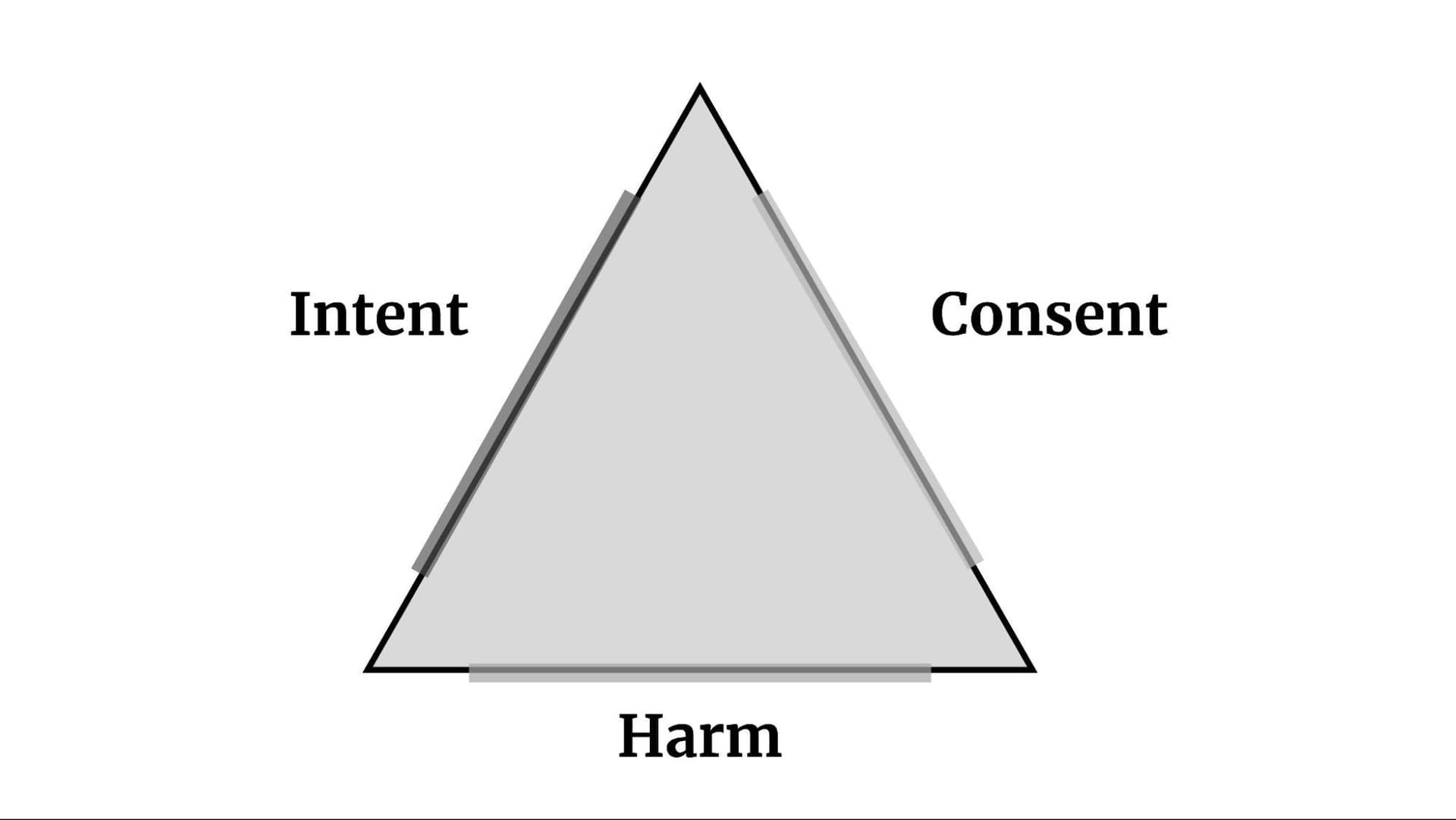
Through our interviews and wider research, we found that three concepts sit at the heart of how image-based abuse is understood (and misunderstood) by legal systems, platforms, and public discourse: intent, consent, and harm itself.
Each of these concepts matters, and they cannot be viewed separately. It is the relationship between them, and the cultural context in which they operate, that determines whether a survivor is supported or failed by the systems meant to protect her.
These three concepts can be understood as three sides of a triangle, each one connected to the others, and unable to stand alone. When legal frameworks or platform policies focus on just one, or even two, they may produce outcomes that are both unjust and disconnected from how harm is actually experienced.
Intent
Understanding the intent of abusers is important, but it is only one factor, and it cannot be the determining factor in how cases are prosecuted or sentenced. Harm can befall a survivor irrespective of the abuser’s intent. A man who shares an image of his wife to humiliate her acts with clear and documented intent; a man who forwards a WhatsApp message without thinking about the woman in it may not. But the consequences for the woman can be identical.
Where intent must be proven, prosecution frequently stalls because perpetrators can avoid accountability even when harm is clear. As research on policing and legislative responses has found, perpetrators can claim a wide variety of alternative motivations that fall outside the legal threshold.8
Pakistan’s PECA legislation reflects this problem directly. Section 21 requires that perpetrators not only act intentionally, but that they do so to harm a person’s reputation, to take revenge, to create hatred, or to blackmail. Whilst all of these motivations appeared clearly throughout our research, they could be difficult to prove in a court of law. England and Wales recognised an equivalent gap in their own law and removed the intent requirement in January 2024, introducing a base offence of sharing an intimate image without consent regardless of motivation.9 Intent-based frameworks place the heaviest burden on survivors and do little to change cultural norms that already blame survivors rather than abusers. They also leave largely unaddressed the full scope of harm felt not just by the survivor but also by her family and community.
As Rida, an independent legal expert we spoke with, argued: the definition of image-based abuse in Pakistani law should be rewritten to criminalise any image shared without consent where it harms a person’s privacy, dignity or psychological wellbeing, arguing for a consent-plus-harm standard.
Consent
Consent, however, is often treated in public discourse and in court as though it were fixed and permanent. Consent to share an image in one context is not consent for that image to be forwarded, screenshotted, or recontextualised. This is why the report’s taxonomy foregrounds consent as a dimension of every category of image. The harm is located in what is done to the image without the subject’s knowledge or agreement, rather than in what it shows.
Harm
Harm, the third side of the triangle, is also poorly understood by existing frameworks, particularly because it so frequently extends beyond the individual survivor. As we found in this report, when an image circulates without consent, it moves through families, neighbourhoods and communities. The harm is not only psychological but social, economic and, in some cases, life-threatening. Nargis and Sanam, two activists from Balochistan whose experiences are described in the full version of the report,10 did not have sexually explicit images shared. What circulated were their words, their political identities, and their visible presence in public life, but the harm was no less severe.
Cultural context is threaded through all three sides of this triangle. What counts as harmful intent, what constitutes meaningful consent, and what registers as harm are all shaped by the social worlds in which images travel. A framework built only on Western legal definitions of intimate content will fail the women whose experiences were shared in this report. Understanding how intent, consent, and harm interact, and how culture shapes all three, is foundational to fully understanding image-based abuse and achieving justice for survivors.
A 2024 Karachi district court case illustrates what justice can look like when all three sides of the triangle are taken seriously. A district and sessions court in Karachi sentenced a man to nine years in prison for posting pictures of his wife online that were described by press coverage as “indecent” or “inappropriate.”11 He was also fined Rs 90,000 ($320 USD / £253 GBP). According to the prosecution, he had shared these photos with her brother via social media and used them to blackmail her. The court observed that “the accused tarnished the dignity of the complainant and her family, violated the complainant’s modesty, displayed obscene videos without her consent, and displayed them publicly”, reflecting the collective nature of harm that women in this research described repeatedly.
Recommendations: what survivors want to change
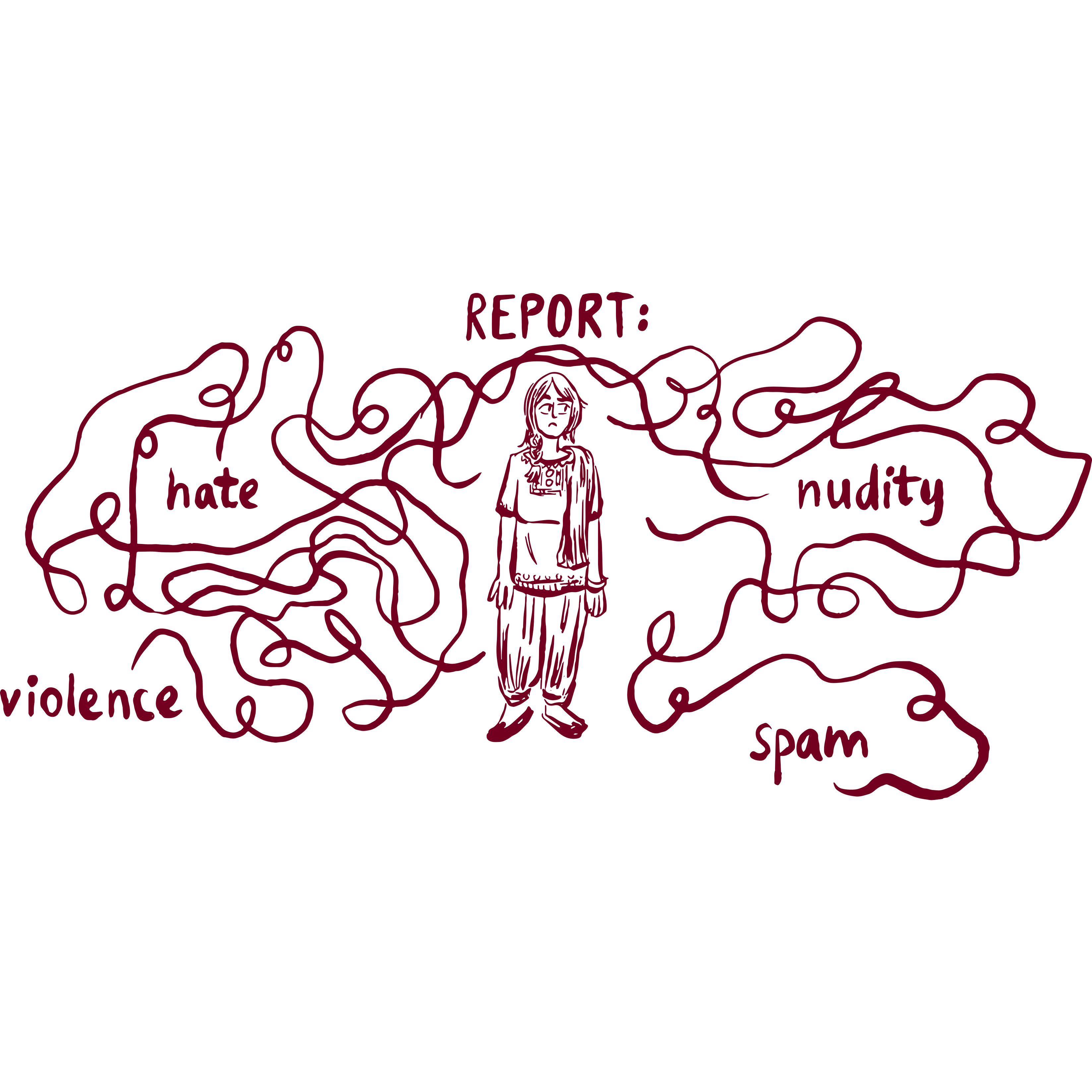
Across interviews, survivors described not only the harm they endured, but also the futures they wanted to see. They talked about systems that respond quickly, laws that reflect their lived realities, institutions that treat them with dignity, and social norms that shift the burden of shame away from women. These visions emerge directly from their experiences and from the systems that have failed them. Together, they form a blueprint for the reforms women want to see and, in many cases, urgently need.
A Cultural shift: belief, empathy and the right to speak without shame
For many survivors, their deepest wish is to be believed. Women repeatedly described the emotional exhaustion of trying to convince others that what had happened was real, serious and dangerous. “I just want them to believe me,” Warda, a survivor from Faisalabad explained. “I started questioning my own sanity.” The disbelief they encounter from families, institutions and even friends often forces them into defence mode at a point when they are most vulnerable.
This longing for belief is intertwined with a broader desire for cultural change. Several participants spoke of wanting a cultural and societal shift away from blaming women to holding men accountable. They were looking for a shift in collective values and a society where women can speak openly without fear of being shamed or silenced.
“When people go there [police] to report, they blame the girl – she might have done this and in return she has gotten this, so her character is not good…we have to change the culture. We have to change the opinions and perceptions of people.”
“In Pakistani society, if a woman is just hanging out minding her own business with her male friends, even if that picture alone is to be shown around to anyone…the blame is always going to be on the woman…the male person, or the colleague…he’s sharing an equal moment. He’s not going to be blamed in Pakistan society. That’s the harsh reality”
At the same time, women expressed a desire for there to be a greater understanding of the cultural context in which they exist. An understanding of why certain images carry danger in Pakistan in ways that may be unthinkable elsewhere. They want platforms and decision-makers to stop demanding that they justify why they may be at risk of harm from an image that does not officially violate community guidelines. Survivors insist that the cultural system itself must be understood and acknowledged.
“If a picture of you is shared from any account that you do not consent to, there shouldn’t be a debate on that…No one should have the right to post anything without accountability, and they must have to take it down. And policies should be trained in such a way that protect people who can be more vulnerable in digital spaces.”
“Do not downplay what we think is important…if it’s a problem to me, it’s a problem to me. I don’t need to explain to you why it’s a big deal. I don’t need you to bring your reasoning into what I think is logical, because we’re two different people, and we have two different cultures.”
Many women also described the need for safe physical and emotional spaces. Places where they can talk without judgement, even from other women. They imagine counselling departments in universities, women-friendly community spaces and environments where survivors can tell their stories and seek support without being policed. “We need spaces where we can talk,” said Sana from Islamabad. “We need counselling.” The desire for a society where honour is not weaponised against women in the first place was clear across multiple accounts.
Transforming public institutions: fast, serious, survivor-centred responses
Women spoke repeatedly about what they wish institutions such as the police, Federal Investigation Agency (FIA), government bodies, and even spaces like universities would do differently. Many described wanting immediate action when they report harm, rather than protracted processes that require retelling trauma in exhaustive detail. “I want them to take action quickly,” one said. Several compared image leaks to “digital sexual assault” and argued that survivors should be able to have content removed “not in days, but in hours”, and that perpetrators should face serious penalties for distributing images without consent. Others emphasised the need to feel safe approaching police stations, to know they will be “taken seriously and not pushed aside”.
When asked what advice she would give to governments or tech companies to make things better for women and girls, one survivor responded:
Original quote in Urdu
سب سے پہلے تو ان لوگوں کے لیے کچھ کریں جو اس واقعے سے متاثر ہوئے ہیں، ایسا دکھاوا نہ کریں جیسے کچھ ہوا ہی نہیں ہے۔ ہمیں یہ دیکھنے کی ضرورت ہے کہ ذمہ داروں کا احتساب کیا جائے گا۔ ہماری حفاظت کو یقینی بنانے کے لیے کچھ عملی قدم اٹھائیں، صرف باتیں نہ کریں۔ اگر کل کو ہمیں کچھ ہو جاتا ہے، تو میں یہ جاننا چاہتی ہوں کہ میری حکومت اور ادارے میرے حق میں آواز اٹھائیں گے۔ ہمارے کلچر میں ان مسائل پر بات کرنا یا آواز اٹھانا اچھا نہیں سمجھا جاتا، لیکن جو خواتین اور لڑکیاں آواز اٹھاتی ہیں، ان کی مدد ہونی چاہیے۔ میں یہ سب کچھ صرف باتوں میں نہیں بلکہ حقیقت میں ہوتے ہوئے دیکھنا چاہتی ہوں، تب ہی مجھے یقین آئے گا.
“First and foremost, take action for the people who were impacted in the incident, don’t pretend nothing happened. We need to see that those responsible will be held accountable. Do something to ensure our safety, don’t just talk. If anything happens to us tomorrow, I want to know that my government and institutions will speak up for me. In our culture it is not considered to raise or talk about these issues but there should be support for women and girls who do speak up. I want to see this in action only then I’ll believe.”
Survivors imagined institutions where frontline officers are gender-sensitised and not dismissive, where female officers are present, respected, and empowered, where survivors are believed and not interrogated, where reporting systems are simple, predictable, and confidential, where investigations stop perpetrators from sharing images further and where cases do not take months or years to resolve.
Those who work closely with survivors were equally clear about what needs to change. Ayesha at the Digital Rights Foundation described law enforcement’s online complaint management platform as “basically ineffective” – a system where survivors of online harassment and TFGBV file reports and simply are not assisted in the manner that they need to be. For women who cannot travel to their relevant cyber crime office, or their mobility depends on a male family member, and for whom involving a male family member carries severe consequences, that online portal represents one of the only potentially safer routes into the system. When it fails to respond, they are left without any effective state recourse at all. She was clear that the legal authorities must strengthen their online complaint system so that it registers complaints, processes them, and generates real follow-up rather than a dead end.
She also pointed to persistent problems with how officers respond when images are not explicitly sexual. In those cases, she said, officers tend to “brush off” complainants, telling them there is nothing to be done. “Intimate is not always sexual,” she said, underscoring the need for state institutions to recognise the broader spectrum of online harm when assessing and responding to complaints. Alongside the systemic issue, she also noted the prevalence of victim blaming within law enforcement, which further deters survivors from seeking justice.
Reem, a trans woman activist with experience working both in policing and government, offered a detailed vision of what meaningful institutional reform would look like in response to these challenges. Training, she argued, is the central issue, but it must go far deeper than box-ticking. She called for mandatory gender-sensitisation workshops, with a clear rule that only officers who complete the training should be assigned to handle these cases. That training should be trauma-informed, teaching officers what trauma is, how it presents, and what its consequences can be. Critically, she argued that government officials alone should not design these modules – civil society experts must be involved, and the training should incorporate the lived experiences of women and transgender people, told in their own words.
She also identified a structural gap that cuts across institutions. For image- and video-based abuse cases, standard operating procedures (SOPs) simply do not exist. She called urgently for SOPs to be developed, formally introduced and actively monitored for compliance. And she returned to a point she described as crucial – that transgender people and women must be actively recruited into cybercrime units:
“When a transgender woman comes seeking help for image- or video-based abuse from a government institution, having a transgender officer available to handle the case would make things much easier.”
Amna, a survivor living in the UK, emphasised that police should not just process complaints, they should actively act to stop ongoing harm. Others described wanting helplines or delegated units that are confidential, streamlined, and responsive, so that survivors feel heard rather than abandoned. The importance of being heard appeared repeatedly. Even when women understood that not every incident could be solved immediately, knowing that someone validated the harm mattered. “The scariest thing is when you’re not heard,” explained Ifrah, based in Canada. This desire for recognition reflects a broader truth: survivors want institutions that treat them with dignity and respect, as people in need of protection rather than moral transgressors or administrative burdens.
Reimagining technology’s role: accountability, speed, and cultural competence
Perhaps the most detailed and urgent demands were directed at tech platforms and companies. Where survivors want discreet and confidential support, they turn to platforms to receive it in a timely and empathetic manner, but many survivors are clear that platforms are currently failing them.
Women want more timely responses, stronger detection systems, and culturally aware moderation. They questioned why platforms can identify a user’s hair in a photo to change its colour, but cannot detect intimate exposure quickly enough to prevent viral spread. Their proposals were practical and detailed. Survivors described a future where platforms take responsibility for the harms that happen to them.
Awareness and education
Another strong theme was the desire for widespread education: not just general cyber-safety advice, but specific, real-life scenarios that reflect what actually happens and give women concrete examples they can relate to and learn from. Survivors wish organisations would use explicit language or terms such as “nudes leaked online” so that survivors searching online for support in panic can find accurate, relatable information. They suggested that when support pages use language that is not known to many women, such as “non-consensual sharing of intimate images”, those searching for support will not know what terms to search for and may miss vital information.
Generic phrasing does not help, participants explained. It hides the situations people need to see reflected. “Words hold a lot of shame” Nida, a survivor from Lahore, said, “but being explicit helps someone recognise… this is what happened to me.”
Women also want accessible workshops that reach girls in schools and colleges, especially because many first experienced image-based harm as teenagers without even knowing the term. Raising awareness, they argued, helps to normalise help-seeking and dismantle silence. Survivors also emphasised the importance of knowledge, including where to go, what to do, what rights they have, and how to act quickly. Lack of information, money, and access continue to prevent many from reporting at all. More knowledge, they argued, would reduce harm and empower girls, hopefully before crises occur.
Saida, a survivor from Karachi, broadened the conversation further. She argued that any meaningful prevention effort must name the wider social context in which image-based abuse occurs. Without acknowledging patriarchal norms and the community dynamics that shape women’s lives and reputations, she suggested, education risks becoming superficial. Women are not navigating these harms in isolation; they are doing so within families and neighbourhoods where honour, silence, and blame often determine what is possible.
She strongly advocated for greater public awareness of cybercrime laws and clear reporting mechanisms, alongside preventive education that genuinely empowers women online. But she was equally clear that knowledge for survivors alone is not enough. Support systems, particularly support from mothers and trusted peer networks, were described as central to resilience and also sites for education and awareness-raising. Without that backing, she reflected, many women “cannot even begin” to confront what has happened to them, let alone seek justice or redress.
In this framing, education is also about shifting the social conditions that make image-based abuse so powerful, and so silencing, in the first place. That shift, participants argued, cannot rest on women and girls alone. Several women were clear that prevention requires engaging boys directly. If patriarchal norms, entitlement, and peer dynamics underpin much of the harm, then those who circulate, trade, or threaten to leak images must also be part of the conversation.
A future where women have someone to turn to
Across all stories, one simple recurring wish stands out: women want someone they can turn to without fear. They want a person who listens, an institution that protects, a platform that responds, and a society that understands.
In many ways, the demands are modest. Survivors are asking to be heard, respected, and taken seriously. They want systems that respond quickly rather than doubting them, laws that protect rather than criminalise or dismiss, and technologies that mitigate harm rather than amplify it. They want the ability to report without endangering themselves, to remove harmful images without needing to spell out their trauma in long and repeated descriptions, and to live without fear that a single photo could destroy their lives.
These hopes reveal that women are not passive victims waiting for protection. They know exactly what needs to change. They have already mapped the failures and they have articulated the path forward.
Recommendations for policymakers
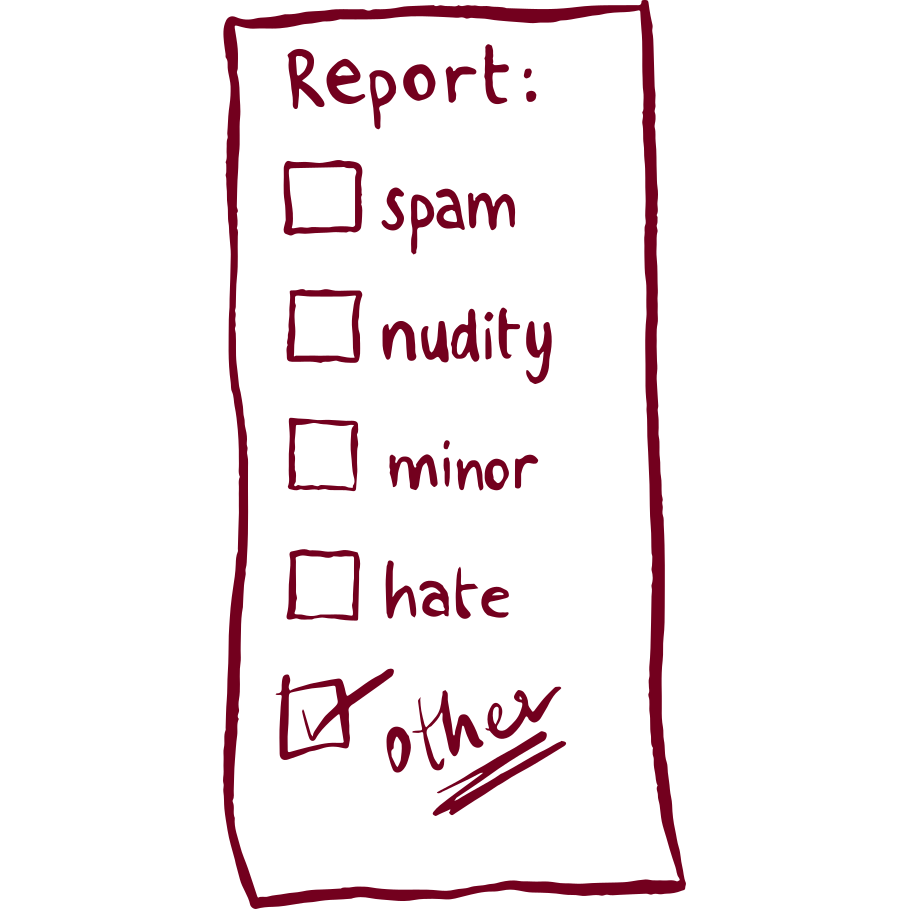
Meaningful change cannot happen for survivors of image-based abuse without changes in the law. While this report focuses on Pakistan, we are clear that it is not just Pakistan that needs a change in its legal framework. Online harm is cross-jurisdictional. Perpetrators and survivors can be spread across borders. The reality of migration and diaspora means that the harm we document in this report does not just happen in Pakistan but across the world, as the stories of women in Canada, the UK and the US who were interviewed in this report demonstrate. It is also important to note that good legislation sets an example for the rest of the world. As such, we encourage policymakers, wherever they are in the world, to look into our policy recommendations for governments and consider how those could be adopted in their country. In particular, at Chayn, we would like to see a global shift away from definitions of image-based abuse as sexual or nude content towards legislation that promotes the right to one’s own image and allows all users to be protected when an image is shared without their consent.
Moving beyond sexual content: the right to one’s own image
Introduce image rights and consent-based protections modelled on France and Denmark.
As we spoke to survivors, we observed that there can be as many different definitions and perceptions of intimacy as there are individuals. However, all survivors agreed that consent should be the necessary condition for sharing a picture, as any image can lead to image-based abuse when shared without consent. We therefore encourage governments to adopt a legal framework similar to France and Denmark12 that centres the right to one’s image. Such frameworks require explicit, informed, and written consent for the sharing or publication of a person’s identifiable image. Limitations should be in place for the right to information, freedom of expression and artistic and cultural freedom, however even within those cases the dignity of the photographed person must be respected.
Criminalise threats to share images as a standalone form of image-based abuse.
Threats are frequently used as tools of coercive control, extortion, domestic abuse, and ongoing intimidation. Victims often experience severe fear, anxiety, behavioural restriction, and psychological harm from threats alone. We therefore encourage governments to recognise threats to distribute intimate or private images, even where no image is ultimately shared, as a standalone offence within image-based abuse legislation.
Improving reporting pathways for survivors
Strengthen specialist training for police, prosecutors, and judges.
Introduce mandatory and ongoing training for police, prosecutors, and judges on technology-facilitated gender-based violence (TFGBV), including digital evidence, coercive control, gender sensitivity, intersectional harms, and trauma-informed responses to survivors.
Create survivor-centred reporting pathways and fast-track mechanisms.
Establish accessible, survivor-centred reporting mechanisms and fast-track procedures for urgent tech abuse cases, including immediate safety risks, ongoing image-sharing, stalking, impersonation, or harassment. In particular, set up a single multi-disciplinary online hate task force to avoid survivors having to deal with multiple layers of reporting and law enforcement.
Ensure accessibility and clarity of policy language.
Review and revise policy frameworks, reporting systems, and public guidance to ensure language is clear, accessible, inclusive, and understandable to diverse users, including people with disabilities, migrants, young people, and those with limited legal literacy.
Enable free access to civil courts and civil remedies for tech abuse cases.
Develop policy frameworks that provide survivors with free or low-cost access to civil courts and civil processes for technology-facilitated abuse cases, including injunctions, takedown orders, damages, and anonymity protections.
Extend limitation periods for bringing cases.
Extend statutory time limits for criminal and civil claims relating to technology-facilitated gender-based violence, recognising that survivors may need substantial time before they are able or willing to report abuse.
Introduce penalties for companies that fail to remove unlawful content within statutory timeframes.
Introduce clear legal duties requiring online platforms, hosting services, and digital intermediaries to remove unlawful image-based abuse content within timelines established under national legislation. Where companies fail to comply, impose proportionate penalties, including fines, regulatory sanctions, and repeat-offender enforcement measures.
Encourage cross-platform enforcement and coordinated takedown mechanisms.
Develop legal and regulatory frameworks that encourage or require cross-platform enforcement, enabling confirmed abusive content removed from one platform to be rapidly identified and removed across other major services through trusted flagger systems, hash-matching tools, and coordinated reporting protocols.
Acknowledging the possibility of malicious reporting
When we presented our policy recommendations to relevant stakeholders, we were often met with a question: what about the false reports? It is a question we are familiar with in the gender-based violence sector, especially when we talk about trusting survivors. As such, it is an important one for us to respond to.
The first scenario we want to take a closer look at is one in which a woman who has been photographed reports a picture even though it is not causing her any harm. It could be that she is doing so simply because she does not like the picture or the way she looks in it. At Chayn, we would argue that this is a good enough reason to take down the picture. The argument behind supporting legislation framed around consent and the right to one’s own picture is that women should not need to prove harm. In fact, it should not matter if there is any harm at all – if a woman wants her picture taken down, it is her right and that right should be respected.
The second case is when a report is made by a third party. In this case, a possible way to avoid malicious reporting is to request that when a user reports on behalf of another person, they identify that person. If the person is a user of the platform on which the content is reported, the next step is to contact them to confirm whether they want the picture taken down.
We also believe that AI and pattern recognition can support the identification of malicious reports. When trolls engage in malicious reporting, they will most likely do this at a large scale, reporting many pictures from many unrelated individuals. It is therefore worth analysing the reporting history of an account. Are they making a report for the first time or have they only done it a few times? Or is the activity happening on a mass scale? Is there other suspicious activity coming from the account? We believe those data points can be used to weed out malicious reporting while still allowing women and their loved ones to report images they legitimately want taken down.
Sources
- 1.Country Factsheets – End Cyber Abuse, n.d. https://endcyberabuse.org/country-factsheets/ [accessed 17 May 2026].
- 2.Explicit Harms of Non-Explicit Images: Defining Image-Based Abuse in Pakistan and the Diaspora https://reports.chayn.co/ [accessed on Monday 24 August 2026]
- 3.‘Adult Image Based Abuse Model Response | SWGfL’, n.d. https://swgfl.org.uk/resources/adult-image-based-abuse-model-response/ [accessed 19 May 2026].
- 4.Swipe Left, ‘Facts and Figures: Ending Violence against Women’, UN Women – Headquarters, 19 November 2025 https://www.unwomen.org/en/articles/facts-and-figures/facts-and-figures-ending-violence-against-women [accessed 19 May 2026].
- 5.‘Orbits: A Global Field Guide to Advance Intersectional, Survivor-Centred, and Trauma-Informed Interv’, Chayn on Notion, n.d. https://chayn.notion.site/Orbits-a-global-field-guide-to-advance-intersectional-survivor-centred-and-trauma-informed-interv-8d8dc6a1436543b8b25af63ddafaa409 [accessed 19 May 2026].
- 6.SWGfL, ‘Adult Image Based Abuse Model Response | SWGfL’, n.d. https://swgfl.org.uk/resources/adult-image-based-abuse-model-response/ [accessed 17 May 2026].
- 7.‘Legal Guide to Image-Based Abuse Legislation in NSW’, TechSafety, n.d. https://techsafety.org.au/blog/legal_articles/legal-guide-to-image-based-abuse-legislation-in-nsw/ [accessed 18 May 2026].
- 8.Antoinette Raffaela Huber, ‘Image-Based Sexual Abuse: Legislative and Policing Responses’, Criminology & Criminal Justice, 25.3 (2025), pp. 736–52, doi:10.1177/17488958221146141.
- 9.‘Tackling Non-Consensual Intimate Image Abuse: Government Response’, n.d. https://publications.parliament.uk/pa/cm5901/cmselect/cmwomeq/911/report.html [accessed 19 May 2026].
- 10.Explicit Harms of Non-Explicit Images: Defining Image-Based Abuse in Pakistan and the Diaspora https://reports.chayn.co/ [accessed on Tuesday 1 September 2026]
- 11.Abdullah, S (2024). “Karachi man sentenced to 9 years in jail for sharing indecent images of ex-fiancée”, Dawn, 15 December. https://www.dawn.com/news/1878358 [accessed on Tuesday 1 September 2026]
- 12.see in France Article 226-1 of the criminal code: https://www.legifrance.gouv.fr/codes/article_lc/LEGIARTI000049312755 and the Act Amending the Copyrights Act in Denmark (will take effect in July 2026)
Take this away
Download the summary as a PDF to read offline, print or share with colleagues.
This summary is drawn from Chayn’s full research on image-based abuse in Pakistan and the diaspora, told through survivors’ own words.